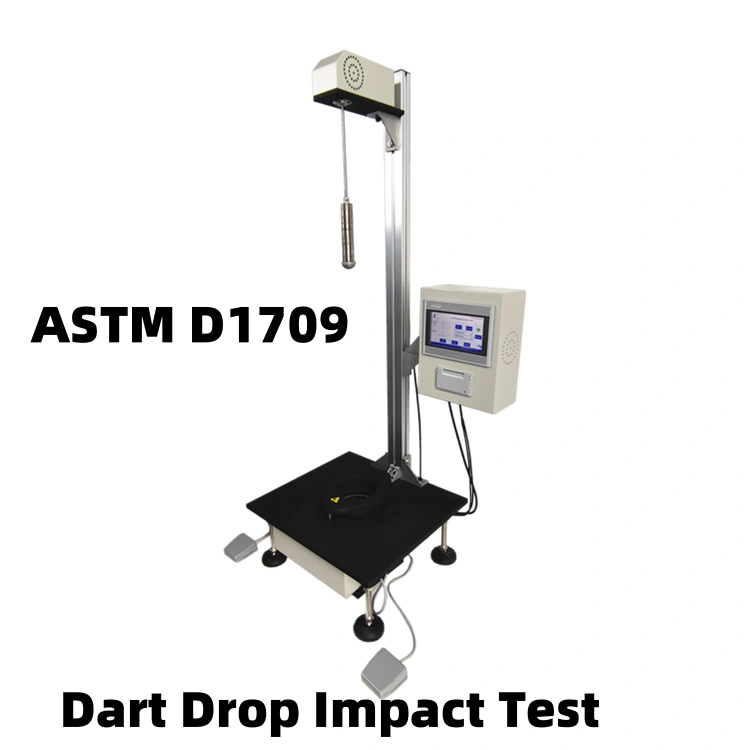
Spletna stran preskus udarca s puščico is a crucial method used to determine the impact resistance of plastic films under specific conditions. According to ASTM D1709, this test measures the energy required to cause failure in a film when subjected to the impact of a free-falling dart. It is commonly used to assess the durability of films used in packaging, medical devices, and other industries where material integrity is essential.
In this article, we’ll explore how the dart impact test standard (ASTM D1709) is implemented, the different testing methods, and how to select the appropriate equipment for your testing needs. If you’re looking to ensure your plastic films meet industry standards, this guide will provide you with essential insights into conducting the dart drop impact test accurately.
The Purpose of the Dart Drop Impact Test
The primary objective of the preskus udarca s puščico is to measure the energy required to cause failure in a plastic film. The test uses a dart with a specified diameter and mass, dropped from a defined height onto a clamped specimen. The goal is to determine the point at which 50% of the specimens fail under impact.
This test method is vital in industries that deal with thin plastic films, including food packaging, medical devices, and other areas where durability against impact is a critical factor.
Dart Impact Test Standard: ASTM D1709
Spletna stran dart impact test standard, outlined in ASTM D1709, provides two testing methods: Test Method A and Test Method B. Both methods are used to determine the energy required for 50% of the specimens to fail, but they differ in the specifications of the dart used and the testing conditions.
Preskusna metoda A
- Dart diameter: 38.10 ± 0.13 mm (1.500 ± 0.005 in.)
- Drop height: 0.66 ± 0.01 m (26.0 ± 0.4 in.)
- Suitable for films with impact resistance requiring masses from about 50 g to 6 kg.
Preskusna metoda B
- Dart diameter: 50.80 ± 0.13 mm (2.000 ± 0.005 in.)
- Drop height: 1.52 ± 0.03 m (60.0 ± 0.25, – 1.70 in.)
- Suitable for films with impact resistance requiring masses from about 0.3 kg to 6 kg.
Both methods aim to establish the missile weight when 50% of the specimens fail, but the choice of method depends on the type of material being tested and the expected impact resistance.
Testing Procedure for Dart Drop Impact
The procedure for conducting the preskus udarca s puščico involves several critical steps to ensure accuracy and reliability of results:
- Apparatus Setup:
Before starting the test, ensure that the dart release mechanism is properly set up. Choose the correct dart size and adjust the drop height according to the method being used. - Sample Preparation:
The specimen must be free from any defects such as wrinkles, folds, or pinholes. The sample should be clamped securely to avoid slippage during testing. - Test Execution:
Release the dart and observe whether the specimen fails upon impact. Record whether each specimen passes or fails, and adjust the missile weight accordingly based on the results. - Data Collection:
After testing, record the number of failures at each missile weight. The final impact failure weight is determined by calculating the weight corresponding to a 50% failure rate.
Why Choose the Cell Instruments Dart Impact Tester (FDT-01)?
For accurate and reliable results, we recommend using the Falling Dart Impact Tester FDT-01 from Cell Instruments. This tester is designed to meet the standards of ASTM D1709, offering precise control over dart weight, drop height, and testing conditions. With easy setup and highly reproducible results, the FDT-01 is an excellent choice for labs and quality control teams testing plastic films, especially in packaging and other critical industries.
Best Practices for Dart Drop Impact Testing
- Conditioning the Specimen: Always condition your test specimens at 23 ± 2°C (73.4 ± 3.6°F) and 50 ± 10% relative humidity for at least 40 hours before testing, as required by ASTM standards
- Ensure Consistency: Use the same dart weight for each group of ten specimens, and incrementally adjust the weight after each test.
- Avoid Specimen Slippage: Make sure the specimen is properly clamped to prevent movement during impact, which can lead to inaccurate results.
- Repeat Tests: Conduct tests on a sufficient number of specimens to ensure reliable and statistically significant results.
Zaključek
Spletna stran preskus udarca s puščico is an essential method for assessing the durability of plastic films in various industries. By adhering to the dart impact test standard ASTM D1709, you can ensure that your materials meet the necessary impact resistance requirements. For best results, consider using high-quality equipment like the Cell Instruments FDT-01 to achieve consistent and accurate testing.
 SL
SL  EN
EN  AR
AR  BG
BG  CS
CS  DA
DA  DE
DE  EL
EL  ES
ES  ET
ET  FI
FI  FR
FR  HU
HU  ID
ID  IT
IT  JA
JA  KO
KO  LT
LT  LV
LV  NB
NB  NL
NL  PL
PL  PT
PT  RO
RO  RU
RU  SK
SK  SV
SV  TR
TR  UK
UK